
7 Energy-Saving Kitchen Plumbing Upgrades
7 Energy-Saving Kitchen Plumbing Upgrades
Want to lower your utility bills and conserve resources in your kitchen? Here are seven practical plumbing upgrades that save energy and water while improving efficiency:
- Low-Flow Faucets: Reduce water usage by up to 30% and save over 2,300 gallons annually.
- Touchless Faucets: Prevent waste with motion sensors that automatically turn water on and off.
- Energy-Efficient Dishwashers: Use as little as 3.5 gallons per cycle, saving water and energy.
- Tankless Water Heaters: Provide hot water on demand with up to 98% efficiency.
- Hot Water Recirculation Systems: Eliminate water waste while waiting for hot water.
- Pipe Insulation: Cut heat loss by 80%, speeding up hot water delivery and reducing energy costs.
- Water Filtration Systems: Improve water quality and reduce reliance on bottled water.
Each upgrade offers unique savings, with options suitable for DIY or professional installation. Combining these during a kitchen remodel maximizes efficiency and cost savings.
| Upgrade | Water Savings | Energy Efficiency | Cost Range | Installation |
|---|---|---|---|---|
| Low-Flow Faucets | Up to 30% less water | Reduces hot water usage | $50–$250 | Easy (DIY or pro) |
| Touchless Faucets | Up to 45% less water | Automatic shutoff saves energy | $300–$800 | Moderate (pro recommended) |
| Energy-Efficient Dishwashers | 3.5 gallons per cycle | 12% less energy than older models | $400–$1,200 | Moderate (pro recommended) |
| Tankless Water Heaters | Indirect savings | 80–98% efficient | $1,000–$3,000 | High (pro required) |
| Hot Water Recirculation | Up to 12,000 gallons/year | Moderate with smart controls | $200–$1,800 | Moderate (pro required) |
| Pipe Insulation | Minimal direct savings | Cuts heat loss by 80% | $0.50–$2/foot | Easy (DIY or pro) |
| Water Filtration Systems | No direct water savings | Minimal energy use | $200–$600 | Easy to moderate |
Upgrading during a remodel? It’s the perfect time to add these features while reducing labor costs. For those in Orlando or Central Florida, professionals like Gomez Contractors can ensure proper installation and compliance with local codes.
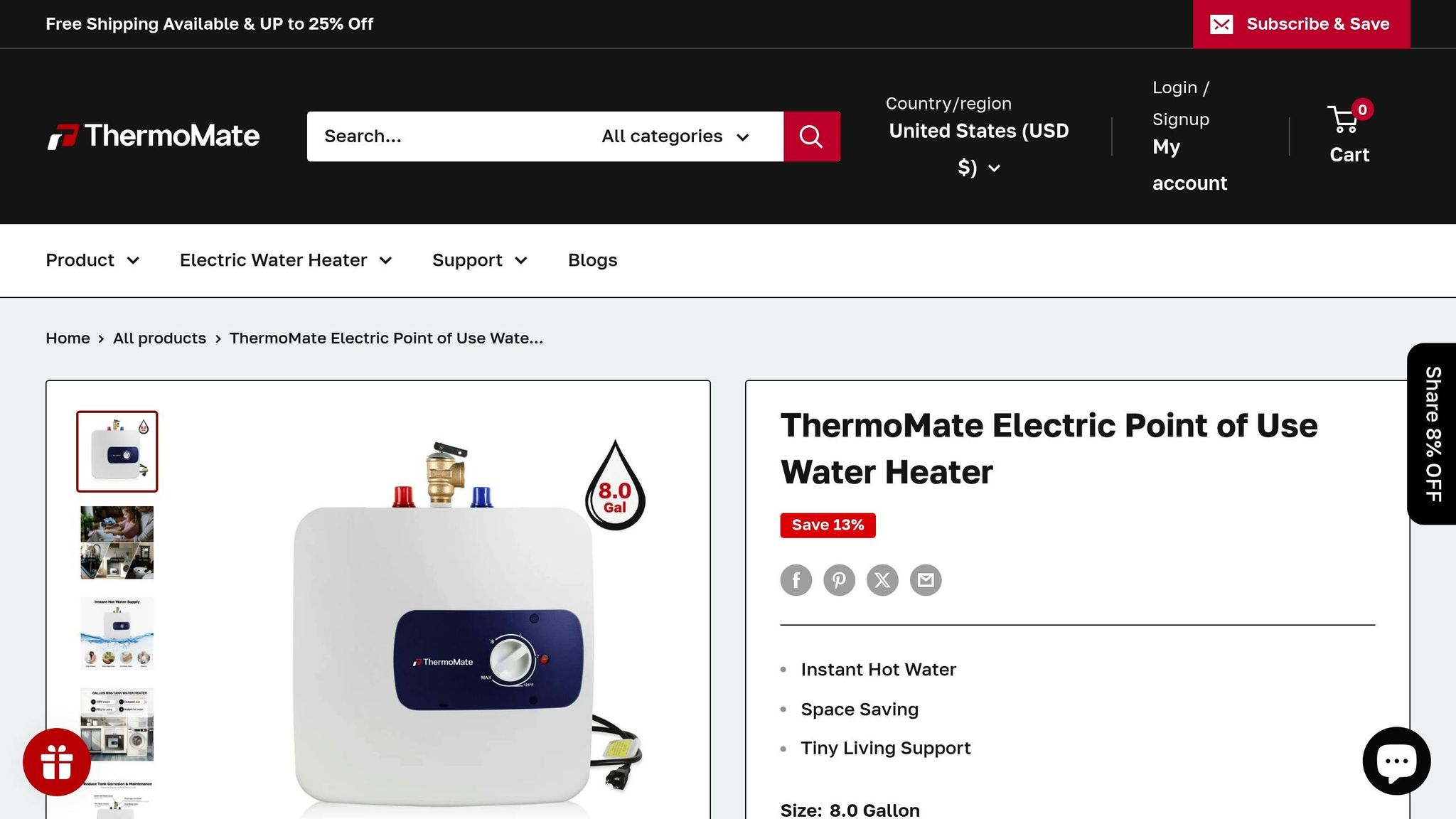
The Secret Under-Sink Upgrade Nobody Talks About… ThermoMate!
1. Low-Flow Kitchen Faucets
Low-flow kitchen faucets are a simple yet impactful upgrade for any home. These faucets use aerators and flow restrictors to limit water output to 1.5–2.2 gallons per minute (GPM), compared to the 2.5 GPM flow rate of standard faucets. By mixing air into the water stream, they maintain strong water pressure for everyday tasks like washing dishes or filling pots. The result? You get the same cleaning power with less water, making them a smart choice for anyone looking to save water and energy.
The savings from these faucets can add up fast. A household switching from a standard 2.5 GPM faucet to a 1.5 GPM low-flow model could save over 2,300 gallons of water and around 330 kWh of electricity each year. That translates to combined water and energy bill savings of $50–$100 annually for the average U.S. household. With efficiency like this, it's clear why these faucets are a practical option for those aiming to cut down on utility costs.
Installing low-flow faucets is typically straightforward. They’re designed to fit standard sink openings, so replacing your current faucet usually doesn’t require major plumbing work. Plus, they’re affordable, with prices ranging from $50 to $250 depending on the brand, features, and finish. While they may cost slightly more upfront than standard models, the savings on water and energy bills often pay off the investment within a few years.
When shopping for a low-flow faucet, look for the EPA's WaterSense label. This certification guarantees the faucet meets strict efficiency standards - capping the flow rate at 2.2 GPM for kitchen models - while still delivering reliable performance. Many WaterSense-certified faucets also qualify for rebates and incentives from local utilities or government programs, which can help offset the initial cost.
For those planning a full kitchen remodel, professional installation ensures the faucet integrates seamlessly with new plumbing systems. Experts, like Gomez Contractors in Orlando and Central Florida, can help make sure your upgrade is efficient and fits perfectly with your renovation plans. To keep your faucet working at its best, clean the aerator regularly and check for leaks. These small maintenance steps can extend the fixture's lifespan and keep water savings on track.
| Faucet Type | Flow Rate (GPM) | Annual Water Savings | WaterSense Certified | Typical Price Range |
|---|---|---|---|---|
| Standard Faucet | 2.5 | 0 gallons | No | $30–$150 |
| Low-Flow Faucet | 1.5–2.2 | 2,300+ gallons | Yes | $50–$250 |
2. Touchless Faucet Technology
Touchless faucets bring a modern twist to your kitchen sink by using infrared motion sensors to detect when your hands are near. As soon as you place your hands under the spout, water flows automatically. Move your hands away, and the water shuts off instantly - no need to touch the faucet at all. This feature helps tackle one of the most common sources of water waste in kitchens: leaving the faucet running while grabbing dishes, soap, or towels. It’s a practical addition that pairs well with other efficiency-focused upgrades in your kitchen.
These faucets are designed with sensors that allow you to adjust sensitivity and flow settings, making it easy to match your water usage to your cooking and cleaning routines. Many modern models also come with features like flow-rate controls and precision spray patterns, ensuring strong water pressure while using less water overall.
Water and energy savings are a major benefit of touchless faucets. By preventing unnecessary water flow during tasks like cooking and cleaning, these faucets can significantly cut down on water usage compared to traditional ones. Plus, the hands-free convenience means you can focus on food prep, fill pots, or wash dishes without constantly reaching for faucet handles. This combination of convenience and efficiency makes touchless faucets a smart choice for reducing water waste.
For the best results, touchless faucets are often installed during a kitchen remodel, especially when plumbing work is already being done. Installation may involve adjustments to water lines and sometimes electrical connections to power the motion-sensing technology. Professional installation ensures the sensors are properly positioned and the faucet integrates smoothly with your sink setup.
When shopping for a touchless faucet, look for models with features like precise spray patterns and flow control to maximize water savings. Also, check for WaterSense certification to ensure the faucet meets high standards for water efficiency.
In addition to saving water, touchless faucets can boost your property’s appeal. Smart plumbing upgrades like these not only reduce the risk of water damage from faucets accidentally left running but also enhance your home’s resale value. They position your home as modern and environmentally conscious - an increasingly important factor as water conservation becomes a priority across the U.S.. For homeowners in Orlando and Central Florida, working with professionals like Gomez Contractors ensures your touchless faucet is seamlessly integrated into your kitchen remodel for a polished and efficient upgrade.
3. Energy-Efficient Dishwashers
Today's ENERGY STAR dishwashers are a game-changer when it comes to water and energy savings. They use as little as 3.5 gallons per cycle, a stark contrast to older models that guzzle over 10 gallons - or even up to 27 gallons if you’re washing dishes by hand. By switching to an ENERGY STAR-certified unit, you can save around 3,870 gallons of water and over $35 annually. Plus, these dishwashers consume about 12% less energy and 30% less water than their non-certified counterparts.
But the benefits don’t stop there. Modern dishwashers are equipped with smart features designed to take efficiency to the next level. For instance, soil sensors automatically adjust water usage based on how dirty your dishes are. Targeted spray arms and advanced filtration systems ensure water stays cleaner throughout the cycle. Many models even offer eco cycles, perfect for light loads, which use minimal water and energy.
Some of the latest models go a step further with Wi-Fi connectivity and app controls, allowing you to customize cycles and monitor usage remotely. Many of these smart dishwashers can sync with home energy management systems, enabling them to run during off-peak hours for even greater energy efficiency.
| Dishwasher Type | Water Use per Cycle | Energy Use | Typical Price Range | Notable Features |
|---|---|---|---|---|
| Old (pre-1994) | 10+ gallons | High | N/A | Basic cycles, no sensors |
| Standard (non-ENERGY STAR) | 6–10 gallons | Moderate | $300–$800 | Limited efficiency |
| ENERGY STAR Certified | 3.5 gallons | Low | $400–$1,200 | Soil sensors, eco cycles, smart features |
| Hand Washing | 20–27 gallons | N/A | N/A | Labor-intensive, less efficient |
When installing an energy-efficient dishwasher, professional installation is key to ensuring it performs at its best. This might involve updating plumbing or electrical systems to meet water supply, drainage, and local building code requirements. Professional installation costs typically range from $150 to $500.
While ENERGY STAR models may come with a higher upfront price - generally between $400 and $1,200 - the savings they offer in the long run make them a worthy investment. Reduced water and energy usage, combined with potential rebates from utility companies or state programs, can significantly offset the initial cost. Imagine this: if every household in the U.S. upgraded to an ENERGY STAR dishwasher, the country could save over 100 billion gallons of water and $1 billion in energy costs every year.
For those in Orlando and Central Florida, upgrading your dishwasher as part of a broader kitchen remodel can amplify the benefits. Companies like Gomez Contractors specialize in integrating energy-efficient dishwasher installations with other improvements, such as low-flow faucets and hot water recirculation systems, to create a well-rounded approach to saving water and energy.
4. Tankless Water Heaters
Tankless water heaters, often called on-demand water heaters, are changing the way kitchens deliver hot water. Unlike traditional heaters that constantly heat and store water in a tank, tankless systems heat water only when needed. This eliminates the standby energy losses associated with keeping a tank of water hot around the clock.
These systems boast efficiency ratings of 80–98%, compared to the 60–80% seen with conventional tank heaters. For households using less than 41 gallons of hot water daily, the U.S. Department of Energy estimates tankless units can be up to 34% more energy-efficient. This efficiency translates to 20–35% savings on water heating costs.
Space-saving design is another big plus. Traditional tank water heaters take up significant floor space, while tankless units are compact, about the size of a small suitcase, and mount directly on the wall. This makes them perfect for kitchens where every square inch matters, freeing up room for storage or other appliances.
However, installation can be tricky. Tankless units require higher energy during operation, which often means upgrading gas lines or electrical circuits. Additional plumbing adjustments may also be necessary to ensure proper water flow and venting. Plus, local building codes must be followed throughout the process.
The cost of a tankless water heater, including installation, ranges from $1,000 to $3,000, whereas traditional tank models typically cost between $500 and $1,500. While the upfront expense is higher, the extended lifespan and energy savings make tankless systems a long-term investment.
| Feature | Tankless Water Heater | Traditional Tank Heater |
|---|---|---|
| Energy Efficiency | 80–98% | 60–80% |
| Standby Energy Loss | None | Yes |
| Lifespan | 20+ years | 10–15 years |
| Upfront Cost | $1,000–$3,000 | $500–$1,500 |
| Space Requirement | Compact, wall-mount | Large, floor space |
| Hot Water Supply | Continuous (on-demand) | Limited by tank size |
Tankless water heaters last over 20 years, outliving traditional tank models, which typically need replacement after 10–15 years. This durability, combined with lower monthly utility bills, helps offset the higher initial investment.
Another key advantage is the continuous supply of hot water. Whether you're filling a large pot for pasta while running the dishwasher, tankless systems ensure you won’t run out of hot water.
In a recent Orlando kitchen remodel, Gomez Contractors replaced an old tank water heater with a high-efficiency tankless model. The homeowner reported a 25% drop in monthly energy bills and gained extra storage space in the kitchen.
Many states and utility companies offer rebates and incentives for installing energy-efficient appliances like tankless water heaters. These programs can help reduce the upfront cost, making the upgrade more affordable for homeowners aiming to improve their kitchen's energy efficiency.
If you're considering a tankless water heater for your kitchen, make sure to choose a model that matches your household's hot water needs. Professional installation is essential, especially for any required gas or electrical upgrades. For those in Orlando and Central Florida, Gomez Contractors offers expert installation as part of their kitchen remodeling services, ensuring compliance with local codes and optimal performance.
sbb-itb-8935015
5. Hot Water Recirculation Systems
Hot water recirculation systems tackle one of the kitchen's most common water-wasting habits: running the faucet while waiting for hot water. By continuously circulating hot water through your pipes, these systems ensure instant access to hot water at your kitchen fixtures, cutting down on water waste significantly. This upgrade complements water-saving fixtures by addressing delays in hot water delivery.
Here’s how it works: a pump is installed near your water heater to create a circulation loop within your plumbing. Hot water flows through the supply lines to your faucet and then returns to the water heater via either a dedicated return line or a retrofit valve. This setup ensures hot water is always available when you need it. The result? A noticeable reduction in water waste.
In homes where the kitchen is far from the water heater, the wait for hot water can waste thousands of gallons annually. A recirculation system eliminates this wait, making it especially useful for tasks like washing dishes, rinsing vegetables, or filling pots for cooking.
That said, energy use can increase if the pump runs continuously. Modern systems address this with smart controls - such as timers, temperature sensors, and demand-based activation - so the pump only runs when hot water is needed. This strikes a balance between convenience and energy efficiency.
Installation Options and Costs
The type of installation depends on your existing plumbing. New construction or major remodels can include dedicated return lines, which offer the best performance. For existing homes, retrofit systems use a special valve at the farthest fixture to create a return path through the cold water line. Professional installation ensures the system works seamlessly with your plumbing and meets local building codes.
Costs vary depending on the system and your home's layout. Retrofit systems typically range from $200 to $800 installed, while systems requiring new plumbing lines can exceed $1,000. Additional features like smart controls may increase the price but offer long-term savings. Here’s a quick breakdown:
| System Type | Cost Range | Best For | Energy Efficiency |
|---|---|---|---|
| Retrofit System | $200–$800 | Existing homes | Good with timers |
| Dedicated Return Line | $1,000+ | New construction/remodels | Excellent |
| Smart Controlled System | $500–$1,200 | Tech-savvy homeowners | Optimized |
Maintenance and Incentives
Maintenance is straightforward. With proper care, most pumps last 5–10 years. Regular inspections, filter cleanings, and leak checks are usually all that’s needed. Following the manufacturer’s guidelines and performing annual maintenance will keep your system running smoothly.
To offset installation costs, check for rebates and incentives. Many states and local utility companies offer programs for energy-efficient plumbing upgrades like hot water recirculation systems. Visit the U.S. Department of Energy's website or contact your local energy provider for more information.
A Cost-Effective Upgrade During Remodeling
If you're remodeling your kitchen, installing a recirculation system during the process can save time and money. When walls are already open and plumbing work is underway, adding this feature becomes much easier and less disruptive. For homeowners in Orlando and Central Florida, companies like Gomez Contractors have successfully integrated these systems into kitchen designs to improve overall efficiency.
6. Pipe Insulation
Pipe insulation is a straightforward way to cut down on energy use in your kitchen, potentially reducing heat loss by up to 80% as hot water flows through your pipes. Without insulation, pipes lose heat, which forces your water heater to work harder to keep the water at the desired temperature.
Adding insulation to your hot water pipes creates a heat-retaining barrier. This means water arrives at your kitchen faucet 2°F to 4°F warmer compared to uninsulated pipes. The result? A 3–4% annual savings on water heating costs. Even small changes like this can make a noticeable difference in your monthly utility bills, especially when paired with other energy-efficient upgrades in your kitchen.
Energy Savings and Practical Benefits
Pipe insulation offers more than just lower energy bills. It speeds up how quickly hot water reaches your faucet, reducing wait times and water waste. Additionally, it prevents condensation on pipes, which can lead to mold growth or corrosion over time. For those in colder climates, insulated pipes help protect against freezing during winter, reducing the risk of water damage and expensive emergency repairs.
Materials and Easy Installation
There are several materials to choose from, including foam sleeves for simple DIY projects, fiberglass wrap for higher heat resistance, and flexible rubber insulation for tight or awkward spaces.
Installing pipe insulation is a quick and easy process that most homeowners can handle in under an hour. Simply cut the insulation to the required length, wrap it around accessible hot water pipes, and secure it with tape or clips. To maximize effectiveness, aim for insulation with a minimum thickness of ½ inch.
Cost and Payback Period
Pipe insulation is one of the most budget-friendly energy-saving updates you can make. Materials generally cost between $0.50 and $2.00 per linear foot, keeping the total expense for a typical kitchen under $50. If you prefer professional installation, expect costs to range from $100 to $300, depending on the length and accessibility of your pipes. Most homeowners recover their investment within one to two years through lower energy bills.
A Smart Addition During Remodeling
While pipe insulation works great as a standalone upgrade, it’s especially cost-effective when included in a larger kitchen remodeling project. If walls are already open and plumbing work is in progress, adding insulation requires minimal effort and cost. For homeowners in Orlando and Central Florida, Gomez Contractors can incorporate pipe insulation seamlessly into broader energy-saving upgrades, ensuring expert installation and tailored solutions.
You may also want to check with your local utility company or visit the Department of Energy’s website to explore rebates or incentives for energy-efficient plumbing upgrades. Including pipe insulation in your remodel not only reduces energy consumption but also prepares your kitchen for future efficiency improvements.
7. Water Filtration Systems with Efficient Plumbing Integration
Integrated water filtration systems are a smart addition to any kitchen, delivering clean, great-tasting water straight from your tap while reducing the need for bottled water. On average, Americans spend about $100–$150 per person annually on bottled water. By comparison, installing an under-sink filtration system costs around $200–$600 upfront, with yearly filter replacements typically ranging from $40–$100. This upgrade not only improves water quality but also complements other energy-efficient kitchen features.
Water Quality and Health Benefits
Under-sink reverse osmosis systems are highly effective, removing up to 99% of contaminants like lead, chlorine, sediment, pesticides, and bacteria. Activated carbon filters further enhance water taste by eliminating chlorine and organic compounds. For those seeking a compact option, inline systems provide moderate filtration and are straightforward to install.
The real-world benefits of these systems are clear. For example, a family of four in Orlando saw their bottled water consumption drop by 90% after installing an under-sink reverse osmosis system, saving them over $800 annually while significantly reducing plastic waste. Similarly, a homeowner in Austin, Texas, reported better-tasting and clearer water, which encouraged more frequent water consumption.
Energy Efficiency and Environmental Impact
Most under-sink and inline filtration systems run solely on water pressure, requiring no electricity. Some advanced reverse osmosis models use booster pumps, but even these consume minimal power - typically under 50 watts. Beyond providing consistently filtered water, these systems help cut energy use by eliminating the need to refrigerate bottled water and reducing the energy required for producing, transporting, and recycling plastic bottles. To put it in perspective, a family of four relying on bottled water can generate over 1,000 plastic bottles annually. Switching to a filtration system can drastically reduce this waste.
Installation and Integration
The complexity of installation depends on the type of system. Under-sink models often require access to the sink cabinet and may involve drilling for a dedicated faucet. Inline systems, on the other hand, typically only need a simple cut into the water line. Installation costs range from $100–$300 for basic systems to $500–$1,000 for more advanced reverse osmosis setups. Factors like system type, local labor rates, and additional plumbing work can influence the final price. If you’re remodeling your kitchen, it’s a great time to install a filtration system since plumbing connections are already being updated. This approach streamlines the process and aligns well with other plumbing upgrades.
Long-Term Value and Maintenance
Maintaining these systems is straightforward. Filters typically need replacement every 6–12 months, while reverse osmosis membranes require replacement every 2–3 years to keep the system functioning at its best. Beyond the practical benefits, integrated water filtration systems are increasingly seen as a valuable kitchen feature, potentially boosting a home's value by 2–5%.
Professional Installation Benefits
Adding a water filtration system during a kitchen remodel can enhance your home's overall efficiency. For homeowners in Orlando and Central Florida, ensuring the system is properly integrated and meets local codes is crucial. Working with experienced professionals, like the team at Gomez Contractors, can make all the difference. They can ensure seamless integration of the filtration system alongside other upgrades, such as low-flow faucets and energy-efficient dishwashers. Professional installation reduces the risk of leaks, ensures optimal system performance, and provides peace of mind with proper warranty coverage.
Comparison Table
The table below provides a side-by-side look at seven kitchen upgrades, comparing their water savings, energy efficiency, ease of installation, upfront costs, and maintenance needs. This breakdown highlights how each option stacks up in terms of performance and practicality.
| Upgrade | Water Savings | Energy Efficiency | Installation Difficulty | Upfront Cost (USD) | Annual Maintenance |
|---|---|---|---|---|---|
| Low-Flow Kitchen Faucets | Up to 30% reduction | Moderate (reduces hot water use) | Low (DIY-friendly) | $170–$500 | $10–$20 (aerator cleaning) |
| Touchless Faucet Technology | Up to 45% reduction | Moderate (automatic shutoff) | Moderate (electrical work) | $300–$800 | $10–$20 (battery replacement) |
| Energy-Efficient Dishwashers | 3–5 gallons per cycle vs. 10+ | High (ENERGY STAR rated) | Moderate (professional recommended) | $650–$1,500 | $50–$150 (filter cleaning, service) |
| Tankless Water Heaters | Indirect savings (faster delivery) | Very High (80–98% efficiency) | High (professional required) | $1,700–$4,500 | $100–$200 (annual descaling) |
| Hot Water Recirculation Systems | Up to 12,000 gallons annually | Moderate (with timers/controls) | Moderate (plumbing modifications) | $600–$1,800 | $50–$150 (pump maintenance) |
| Pipe Insulation | Minimal direct savings | Moderate (3–4% heating savings) | Low (DIY-friendly) | $170–$500 | Under $50 (inspection, repairs) |
| Water Filtration Systems | No direct savings | Low (pressure-operated) | Low to Moderate | $250–$1,100 | $40–$150 (filter replacements) |
Each upgrade offers unique benefits, making it easier to choose based on your priorities. For instance, low-flow and touchless faucets provide excellent water savings at relatively low costs, making them great starting points. On the other hand, tankless water heaters and energy-efficient dishwashers deliver substantial energy savings but come with higher installation and maintenance costs.
When it comes to installation, some upgrades like low-flow faucets and pipe insulation are simple enough for DIY enthusiasts. However, more complex options, such as tankless water heaters, often require professional help due to the need for gas or electrical system upgrades. Maintenance needs vary as well, from occasional aerator cleaning for faucets to regular descaling for tankless systems.
Timing multiple upgrades during a kitchen renovation can save on labor costs and reduce disruption. For example, combining mid-range options like dishwashers and hot water recirculation systems can deliver immediate water savings and long-term energy efficiency.
Regional factors also play a role. In areas like Orlando and Central Florida, where hard water is common, water filtration systems not only improve water quality but also protect appliances from mineral buildup. Local contractors, such as Gomez Contractors, can help integrate these upgrades seamlessly into a remodel.
This comparison serves as a practical guide for prioritizing upgrades, ensuring your kitchen renovation maximizes water conservation and energy efficiency.
Conclusion
Adopting these seven energy-saving kitchen plumbing upgrades can lead to noticeable savings. For instance, low-flow kitchen faucets can cut water use by up to 30%, and aerated faucets can save more than 2,300 gallons of water per year per fixture. Tankless water heaters, with efficiency rates of 80–98% compared to the 60–80% range of traditional tanks, offer significant energy reductions. These upgrades not only save money upfront but also build a foundation for long-term cost efficiency.
Beyond lowering utility bills, these improvements can make homes more appealing to buyers. Studies show they can increase resale value by 3–5%. Features like energy-efficient fixtures are increasingly expected by buyers, while smart options such as touchless faucets and leak detection systems can give homes a competitive edge in the market.
The benefits also extend to the environment. These upgrades help conserve local water supplies and reduce household greenhouse gas emissions, making them particularly impactful in areas like Central Florida, where water conservation is a priority.
Timing these upgrades during a kitchen remodel is a smart move, as it reduces labor costs and simplifies the process. When plumbing work is already planned, installing multiple systems at once minimizes disruptions. Hiring professionals ensures that systems like tankless water heaters and recirculation systems are correctly sized and installed, guaranteeing optimal performance and preserving warranties.
For homeowners in Orlando and Central Florida considering a kitchen renovation, Gomez Contractors offers expertise backed by three generations of experience. Their commitment to quality craftsmanship and tailored solutions ensures that these energy-efficient upgrades blend seamlessly with custom designs and premium finishes, creating kitchens that are both practical and stylish.
Whether you start small with low-flow faucets or go all-in with a complete upgrade, these plumbing improvements are smart investments. They deliver savings on utility bills, boost property value, and contribute to a more sustainable future.
FAQs
How do low-flow and touchless faucets help save water and energy in the kitchen?
Low-flow faucets are designed to cut down on water usage by controlling the flow rate, all without compromising on performance. This means you can save a noticeable amount on your water bills over time. Touchless faucets take water efficiency to the next level by using sensors to dispense water only when needed, helping to eliminate unnecessary waste. When combined, these faucet upgrades not only help conserve water but also reduce the energy needed to heat it, offering a smart, eco-conscious, and budget-friendly solution for your kitchen.
What should you consider when installing a tankless water heater in your kitchen?
Installing a tankless water heater in your kitchen can be a smart way to save energy and create extra space. However, there are a few important things to think about before getting started. First, check whether your home's electrical or gas system can handle the unit's requirements. Tankless water heaters often need upgrades to your existing setup, so this step is crucial. For gas-powered models, proper ventilation is a must to keep things safe and efficient.
Placement matters, too. Since tankless water heaters deliver hot water on demand, installing one closer to your kitchen can help reduce the wait time for hot water. To ensure everything goes smoothly and meets local codes, it’s a good idea to work with a professional plumber who can assess your plumbing system and handle the installation properly.
How can adding a hot water recirculation system during a kitchen remodel save water and energy?
When planning your kitchen remodel, consider adding a hot water recirculation system. This upgrade can cut down on water waste by ensuring hot water is instantly available at your faucet, eliminating the need to let water run while waiting for it to heat up. Over time, this simple addition can save several gallons of water each day.
Today's recirculation systems are built with efficiency in mind. Many operate on-demand or use timers to reduce energy consumption while maintaining convenience. By incorporating this feature into your remodel, you'll not only conserve water and energy but also enjoy the added comfort and practicality it brings to your kitchen.
