
Sustainable Landscaping in Florida Complete Guide
Ultimate Guide to Sustainable Landscaping in Florida
Florida's climate and soil present unique challenges for landscaping, but with eco-friendly practices, you can save water, reduce maintenance costs, and protect local ecosystems. Here's how:
- Choose native plants like Firebush and Coontie, which thrive in Florida's sandy soils and require less water.
- Use water-efficient irrigation systems such as drip irrigation and rain barrels to cut water usage by up to 30%.
- Prevent soil runoff with mulch, bioswales, and rain gardens to improve water retention and reduce flooding.
- Group plants by water needs (hydrozoning) for easier care and optimized irrigation.
- Recycle yard waste into compost to enrich soil naturally and reduce fertilizer use.
FLORIDA FRIENDLY LANDSCAPING PRINCIPLES: Gardening how-to discussion from a Landscape Architect
Basic Rules for Eco-Friendly Landscaping
Creating an eco-friendly landscape in Florida means tailoring your approach to the state’s unique environment. The Florida-Friendly Landscaping™ (FFL) program offers a detailed framework built around nine key principles, covering everything from plant choices to water management. These principles serve as the foundation for the strategies outlined below.
Florida-Friendly Landscaping™ (FFL) Guidelines
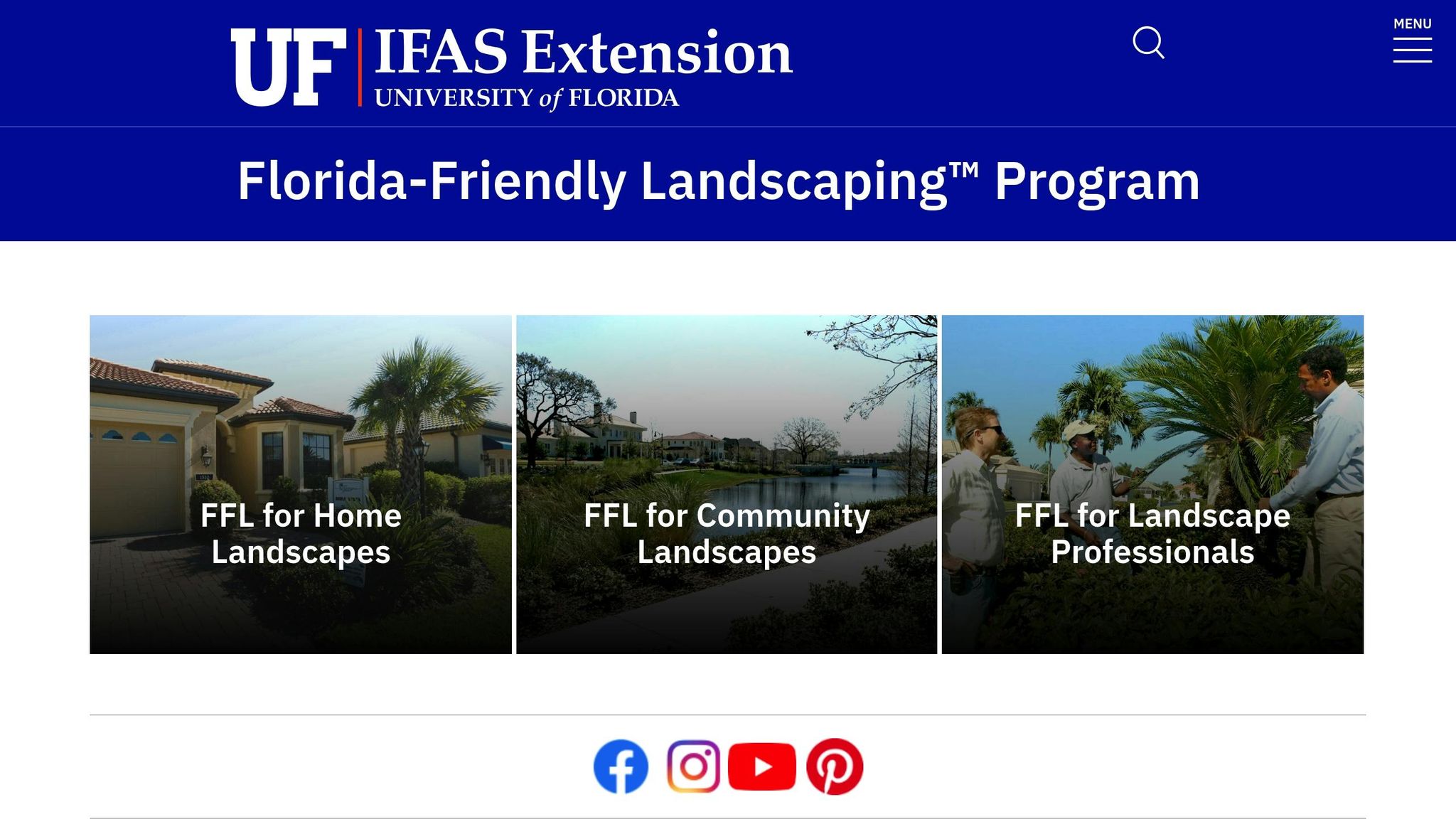
The FFL program emphasizes nine core principles: Right Plant, Right Place; Water Efficiently; Fertilize Appropriately; Mulch; Attract Wildlife; Manage Yard Pests Responsibly; Recycle Yard Waste; Reduce Stormwater Runoff; and Protect the Waterfront.
One of the most impactful principles is "Right Plant, Right Place." By choosing plants suited to your soil, sunlight, and moisture conditions, you can significantly cut down on irrigation, fertilizers, and pesticides. For example, native species like coontie (Zamia integrifolia) and saw palmetto thrive in Florida’s sandy soils with minimal upkeep.
Another useful approach is grouping plants by their water and sunlight needs - a concept known as hydrozoning. This method can reduce water usage by as much as 50%.
Mulching is another game-changer. It helps conserve moisture, suppress weeds, regulate soil temperature, and enrich Florida’s sandy, nutrient-poor soils. Mulch can reduce soil evaporation by up to 70%.
Incorporating native plants into your landscape also supports local wildlife while reducing the need for fertilizers and pesticides by roughly 54%.
Managing Rainwater and Preventing Soil Loss
Florida’s weather swings between heavy rains and dry spells, making smart water management essential. Techniques like bioswales, rain gardens, and permeable pavers can help manage stormwater and protect waterways.
Bioswales and rain gardens are especially effective at slowing stormwater runoff, increasing infiltration, and preventing erosion. Similarly, using porous materials for walkways or patios allows rainwater to seep into the ground, reducing surface flooding and replenishing groundwater. Many Florida communities are adopting these methods to combat flooding and improve water quality.
Reusing Yard Waste and Reducing Environmental Impact
Sustainability extends beyond water management - repurposing yard waste is another powerful tool. Turning organic waste into compost is both practical and environmentally friendly.
Florida’s warm climate speeds up the decomposition process, making composting an efficient way to recycle kitchen scraps (like fruit and vegetable peels) and yard waste. The resulting compost enriches soil, boosts water retention, and cuts down on waste disposal costs.
Reducing turfgrass areas is another effective strategy. Replacing sections of lawn with groundcovers, mulched beds, or native plant gardens lowers the need for mowing, watering, and chemical treatments. Many municipalities in Florida encourage these efforts, offering yard waste recycling programs and even rebates for reducing turfgrass or installing water-efficient irrigation systems. By treating organic materials as resources instead of waste, you can create a landscape that’s both sustainable and eco-friendly.
Choosing Plants That Work in Florida's Climate
Florida's sandy soils, unpredictable rainfall, and intense heat demand plants that are naturally suited to the environment. By selecting species that thrive under these conditions, you can create a landscape that's not only beautiful but also environmentally conscious. The key lies in focusing on native plants that are well-suited to Florida's unique climate.
Native Plants and Water-Saving Species
Native plants have adapted over thousands of years to Florida's climate, making them ideal for sustainable landscaping. These plants are naturally resilient to drought, heat, and sandy or salty soils.
Take Firebush (Hamelia patens), for example. This versatile shrub blooms almost year-round with vibrant tubular flowers that attract hummingbirds and butterflies. Once established, it requires very little water and thrives in both full sun and partial shade, making it a flexible choice for various landscapes.
Another standout is Coontie (Zamia integrifolia), a low-maintenance plant with a palm-like appearance. It's incredibly hardy, surviving dry spells and poor soil conditions that would challenge most ornamental plants. Plus, it plays a critical role as the sole host plant for the endangered Atala butterfly.
For coastal areas or properties exposed to salt, Sea Grape (Coccoloba uvifera) is a fantastic choice. Its large, round leaves serve as natural windbreaks, and its grape-like fruit clusters provide food for local birds. It handles salt spray and sandy soils effortlessly.
Saw Palmetto (Serenoa repens) is another excellent option. This hardy groundcover or accent plant requires almost no supplemental watering once established. It also provides dense cover that serves as shelter for wildlife.
These native plants not only require less water but also support local wildlife like pollinators and birds. They're naturally resistant to local pests and diseases, which means less maintenance for you.
Organizing Plants by Water and Sun Needs
Grouping plants with similar water, sunlight, and soil requirements - known as hydrozoning - can make your landscape more efficient and easier to maintain. This method ensures that each plant gets exactly what it needs to thrive.
Start by observing your yard at different times of the day and across seasons. Use these insights to create zones. For the hottest, driest areas, choose drought-tolerant species like Muhly Grass (Muhlenbergia capillaris) and Blanket Flower (Gaillardia pulchella). These plants not only withstand Florida's intense summer heat but often perform better with minimal watering once established.
In shadier, wetter spots, go for plants that prefer consistent moisture. Simpson's Stopper (Myrcianthes fragrans) and Beautyberry (Callicarpa americana) thrive in these conditions. They also provide food for birds and adapt well to Florida's humid, shaded areas.
This method offers more than just water savings. When plants with similar needs grow together, they create a beneficial microclimate. For example, taller plants can provide shade for shorter ones, while groundcovers help retain soil moisture for nearby shrubs and trees.
Hydrozoning also simplifies maintenance. You can water, fertilize, and care for entire zones at once, rather than managing individual plants scattered across your yard. This approach not only conserves water but also enhances the overall sustainability of your landscape.
Adding Different Plant Types for Wildlife
Once you've selected and organized your plants, adding variety can turn your yard into a vibrant ecosystem that supports Florida's native wildlife while keeping your landscape visually appealing year-round.
Flowering plants are a cornerstone for attracting pollinators. Native species like Firebush and Blanket Flower provide nectar for butterflies, bees, and hummingbirds throughout much of the year. These pollinators, in turn, help other plants reproduce, creating a self-sustaining cycle.
Berry-producing shrubs add another layer of support for wildlife. For instance, Beautyberry produces bright purple berries that feed over 40 bird species. Similarly, Simpson's Stopper features small white flowers followed by red berries, offering both nectar and fruit.
Dense groundcovers and low shrubs provide essential shelter for small animals, lizards, and ground-nesting birds. Native grasses like Muhly Grass not only add movement and texture to your yard but also supply seeds and nesting materials for birds.
Finally, canopy trees complete the ecosystem by offering nesting sites for larger birds and shade for understory plants. Native oaks are particularly valuable, supporting over 200 species of butterflies and moths in their caterpillar stage, which in turn benefits local bird populations.
Water-Saving Irrigation and Management
Florida's distinct wet and dry seasons make efficient water management a necessity. The key lies in capturing water during periods of abundance and using efficient systems when rainfall is scarce.
Water-Saving Irrigation Systems
Drip irrigation offers a precise way to conserve water. Unlike traditional sprinklers that lose water to evaporation and runoff, drip systems deliver water directly to the roots of plants, where it’s needed most. For example, a community park that switched to drip irrigation cut its water usage by 30 percent, demonstrating the system’s effectiveness.
Smart controllers take water conservation a step further by adjusting irrigation based on weather, soil moisture, and seasonal changes. Data from the Southwest Florida Water Management District shows that properties using these controllers saved an average of 15,000 gallons of water annually compared to those using traditional timers.
Rain barrels and cisterns provide another practical solution by capturing roof runoff during storms. This stored water can supplement irrigation needs, reducing reliance on municipal water supplies.
To get the most out of these systems, install drip irrigation before planting to ensure full coverage. Prioritize areas like gardens and new plantings, which require consistent moisture to establish strong roots. These systems integrate well with landscaping strategies aimed at conserving resources, aligning with the Florida-Friendly Landscaping initiative to reduce overall water use.
Improving Soil for Better Water Storage
Florida’s sandy soils tend to drain quickly, often before plants can absorb enough moisture. Adding compost can help. Compost enriches the soil, improving its ability to hold water by creating sponge-like pockets that retain moisture and release it gradually to plant roots. This reduces the frequency of irrigation.
Mulch also plays a vital role by acting as a protective layer over the soil. It can reduce evaporation by up to 70 percent. Apply a 2–4 inch layer around plants, but keep it a few inches away from tree trunks and shrub stems to prevent rot. Organic mulches, like wood chips, decompose over time, further enriching the soil.
Together, compost and mulch can lower irrigation needs by 25–40 percent. Many Florida municipalities even offer free mulch from tree trimming operations, making this an affordable and sustainable option.
By enhancing soil’s water-retention capacity, you can complement water-saving practices and maintain a resilient landscape throughout the year.
Daily Water Conservation Tips
In addition to the strategies above, these daily habits can further reduce water use:
- Follow local watering restrictions: Many Florida areas have specific guidelines for watering days and times, typically in the early morning when evaporation rates are lowest. Check with your local water utility for current rules.
- Water only when necessary: Overwatering can waste resources, weaken plant roots, and attract pests. Check soil moisture by inserting your finger 2–3 inches into the soil near plants. If it feels moist, skip watering.
- Group plants by water needs (hydrozoning): Arrange plants with similar water requirements together to optimize irrigation efficiency.
- Adjust irrigation based on seasons: During Florida’s rainy season (June through September), reduce or even pause supplemental watering. While smart controllers handle this automatically, manual systems need regular adjustments.
- Monitor your irrigation system: Homeowners in Sarasota who adopted Florida-Friendly Landscaping practices, including efficient irrigation, reported a 40 percent reduction in outdoor water use within a year.
- Use soil moisture sensors: These devices provide precise control by preventing watering when the soil already has adequate moisture.
sbb-itb-8935015
Natural Maintenance and Long-Term Care
Once you've set up water-saving measures and selected the right plants, the next step is ensuring your Florida landscape thrives over time. Long-term natural maintenance not only keeps your yard healthy but also enriches the soil, encourages biodiversity, and helps create a self-sustaining environment.
Natural Fertilizers and Pest Control
Florida’s sandy soils often need a little extra care. Organic fertilizers, like compost or aged manure, can work wonders by improving soil structure and reducing nutrient runoff.
For pest control, consider Integrated Pest Management (IPM). This approach includes selecting pest-resistant native plants, keeping an eye out for issues early, and using non-toxic methods like hand-picking pests or applying neem oil. These steps help maintain a balance by protecting beneficial insects.
Proper Pruning and Seasonal Care
Once you've tackled nutrients and pests, seasonal care becomes essential for maintaining a strong, resilient landscape. For pruning, aim for late winter or early spring, and always use sharp, clean tools. When it comes to palms, only remove fronds that are completely brown.
If you have St. Augustine grass, mow it to a height of 3–4 inches and leave the clippings behind - they act as a natural fertilizer by returning nutrients to the soil.
Florida’s unique, year-round growing season means your care routine will change with the seasons:
- Spring: Focus on applying organic fertilizers and refreshing mulch.
- Summer: Keep a close watch for pests and manage irrigation efficiently.
- Fall: This is the perfect time to plant native species and perennials.
- Winter: Use this slower growth period for major pruning and reducing irrigation needs as plants rest.
Composting and Yard Waste Programs
Turn yard waste - like grass clippings, leaves, and even kitchen scraps - into nutrient-packed compost. This not only improves your soil’s water retention but also boosts beneficial microbe activity.
Many Florida counties offer yard waste collection and composting services. While it’s great to take advantage of these programs, consider leaving some organic matter, like leaf litter or dead wood, in your yard. This supports beneficial insects and enhances soil health. For more complex maintenance tasks, you can always reach out to professionals like Gomez Contractors for expert help.
Eco-Friendly Outdoor Living Areas
Create outdoor spaces that combine comfort with a commitment to the environment. Florida's unique climate offers both opportunities and challenges when it comes to designing sustainable outdoor areas. These spaces must handle humidity, heavy rains, and intense sunlight, all while supporting local ecosystems.
Building with Eco-Friendly Materials
The foundation of an eco-friendly outdoor space starts with choosing sustainable materials. Recycled concrete and porous pavers are excellent options. Not only do they reduce construction waste, but porous pavers also allow rainwater to seep into the ground, cutting down on runoff and helping replenish groundwater supplies. This is especially important in a state like Florida, which boasts over 10,000 miles of rivers and streams. On top of that, these pavers require less maintenance over time.
For wooden features such as pergolas, decks, or furniture, opt for sustainably sourced or reclaimed wood. Florida's native cypress is a standout choice - it naturally resists rot and pests, making it ideal for the humid climate. Reclaimed wood is another great option, offering a rustic charm while reducing waste. Plus, it often requires fewer chemical treatments compared to pressure-treated wood. These choices not only benefit the environment but also reduce upkeep and support water conservation efforts.
When it comes to lighting, solar-powered LED systems are a win-win. They cut energy use and minimize light pollution, which can disturb local wildlife. Strategically placed solar lights enhance both safety and ambiance, blending seamlessly into the natural surroundings. And with advancements in technology, these systems are now more affordable than ever.
Outdoor Spaces That Serve Multiple Purposes
Sustainability in modern outdoor design often means creating spaces that are versatile and efficient. Take outdoor kitchens, for example. They can feature energy-efficient appliances, countertops made from recycled materials, and even integrated herb gardens. These gardens not only provide fresh ingredients but also attract pollinators like bees and butterflies.
Permeable patio surfaces offer dual benefits: they provide a space for entertaining while helping to manage stormwater. A patio made with porous pavers can serve as a hub for dining and relaxing, all while directing rainwater away from the home. Recycled modular furniture is another smart addition - it can be rearranged for various activities and reduces waste by repurposing materials.
Native plants are a cornerstone of sustainable outdoor design. Borders filled with plants like saw palmetto, coontie, muhly grass, firebush, and blanket flower thrive in Florida's climate. Once established, these plants need little irrigation and provide shade and support for local wildlife. Vertical gardens and edible plant walls are another clever way to maximize functionality without taking up extra ground space. These systems can host herbs, vegetables, or native flowers, adding beauty while improving air quality.
Working with Professionals for Outdoor Projects
To bring eco-friendly designs to life, professional expertise is essential. Contractors familiar with Florida's unique climate and environmental needs can ensure that sustainable features are installed correctly and effectively. Experienced professionals also understand Florida-Friendly Landscaping™ (FFL) guidelines, which focus on protecting water resources through thoughtful design and maintenance.
For Central Florida homeowners, companies like Gomez Contractors specialize in crafting custom outdoor living spaces that align with sustainable principles. Their expertise includes installing permeable surfaces, integrating native plants, and setting up energy-efficient lighting systems. They also ensure projects comply with local building codes and often have access to responsibly sourced materials, making it easier for homeowners to achieve their eco-friendly goals.
Investing in professional design and installation can pay off in multiple ways. It often boosts property value, lowers utility bills, and reduces ongoing maintenance costs. In some cases, these sustainable upgrades may even qualify for local incentives or rebates, adding to the financial and environmental benefits. Supporting Florida's eco-friendly landscaping efforts has never been more rewarding.
Conclusion
Sustainable landscaping in Florida not only conserves natural resources but also creates outdoor spaces that can withstand environmental challenges. The nine Florida-Friendly Landscaping™ principles - outlined in the Florida-Friendly Landscaping™ guidelines - serve as a clear path to achieving this. These principles include: planting the right species in the right location, efficient watering, appropriate fertilization, mulching, encouraging wildlife, managing pests responsibly, recycling yard waste, minimizing stormwater runoff, and preserving waterfront areas.
By adopting these practices, homeowners can cut outdoor water use by as much as 50% compared to traditional turfgrass landscapes. Native plants like Firebush and Coontie thrive without excessive irrigation or chemical treatments, while composting and mulching naturally boost soil health . Efficient irrigation systems and native plantings also play a big role in reducing water consumption.
These efforts are even more critical when you consider Florida's abundant water resources - 10,000 miles of rivers and streams, 7,800 lakes, and over 700 freshwater springs. Simple choices, like using permeable pavers or grouping plants by their water needs, can help protect these vital resources from pollution and overuse.
Collaborating with professionals like Gomez Contractors ensures that sustainable features like rain gardens and permeable outdoor spaces are thoughtfully designed and built to last. From selecting native plants to installing water-efficient irrigation systems, these strategies form the backbone of a sustainable and resilient Florida landscape.
Beyond environmental benefits, sustainable landscaping also reduces cooling and infrastructure costs, while increasing property values by appealing to eco-conscious buyers. More importantly, it creates outdoor spaces that enrich daily life and help preserve Florida’s unique ecosystems for future generations.
FAQs
Why should I use native plants in my Florida landscape, and how do they support sustainability?
Using native plants in your Florida yard comes with plenty of perks and helps protect the environment. Because these plants are naturally suited to Florida's unique climate, soil, and rainfall, they’re better equipped to handle local conditions. This means less need for constant watering, fertilizers, or pesticides - saving water and cutting down on harmful chemical runoff.
On top of that, native plants are a lifeline for local wildlife. They provide food and shelter for animals like bees and butterflies, which are essential for keeping ecosystems balanced. By choosing native plants for your landscaping, you’re not just creating a stunning, easy-to-care-for yard - you’re also giving back to Florida’s natural environment and lowering your impact on the planet.
What are some effective water-saving irrigation techniques for Florida gardens, and how much can they save?
Reducing water usage in your Florida garden doesn’t mean sacrificing a healthy landscape. In fact, with the right techniques, you can keep your garden thriving while conserving water. One effective option is installing drip irrigation systems, which target water directly to plant roots, cutting down on evaporation and waste. Adding rain sensors or smart irrigation controllers can take it a step further by automatically adjusting watering schedules based on the weather.
Another smart approach is hydrozoning - grouping plants with similar water needs together. This ensures that each area of your garden gets just the right amount of water without overdoing it.
These strategies can lead to impressive savings, potentially cutting your outdoor water use by 30-50%, depending on your current setup. Beyond conserving water, these methods can also help trim your water bill, offering a win-win for both the environment and your wallet.
How can I manage yard waste and compost effectively in Florida's climate to improve soil health?
Florida's warm, humid weather creates the perfect environment for composting, making it a great way to improve your soil. Start by gathering yard waste such as grass clippings, leaves, and small branches. Be mindful to exclude invasive plants or materials treated with chemicals. For quicker decomposition, chop larger items into smaller pieces.
To produce compost packed with nutrients, aim for a mix of "greens" (like fresh grass clippings) and "browns" (like dried leaves). Keep the pile moist - think of the texture of a damp sponge - and turn it regularly to allow air to circulate. Once ready, the compost can be worked into your garden beds to enhance soil structure and help retain moisture. This can cut down on how often you need to water.
If you find yourself with more yard waste than you can compost, consider using local yard waste collection services. Alternatively, you can turn the excess into mulch for pathways or garden beds. Mulch not only keeps weeds in check but also helps the soil stay cooler during Florida's hot summer months.