
Rainwater Harvesting Systems for Florida Homes
Rainwater Harvesting Systems for Florida Homes
Rainwater harvesting is a practical way for Florida homeowners to collect and store rainwater for various uses like irrigation, cleaning, or even non-potable indoor tasks. With Florida's frequent rainfall and water supply challenges, these systems can help reduce reliance on public water and manage stormwater runoff effectively. Here's what you need to know:
- How It Works: Rainwater is collected from roofs, filtered for debris, and stored in barrels or cisterns for later use. A 1,000-square-foot roof can yield around 600 gallons of water from just one inch of rain.
- Uses: Common applications include watering plants, washing cars, and filling ponds. With permits, some homeowners use it for flushing toilets or running washing machines.
- Florida's Advantages: Harvested rainwater is private property, making it available even during municipal water restrictions. It also reduces stormwater runoff, helping to prevent soil erosion and water pollution.
- System Types: Options range from simple 50-gallon rain barrels to larger cisterns that hold thousands of gallons. Overflow can be managed with rain gardens.
- Regulations: Florida permits rainwater harvesting, but larger systems may require permits and HOA approval.
- Maintenance: Regular cleaning, sealing to prevent mosquitoes, and checking overflow pipes are essential for system upkeep.
Whether you're starting with a small rain barrel or investing in a large cistern, these systems offer an efficient way to make the most of Florida's abundant rainfall while conserving water resources.
Florida Regulations and Site Requirements
State and Local Regulations
Rainwater harvesting is fully permitted across Florida. Regulations for non-potable water systems, such as those used for irrigation, car washing, or toilet flushing, are outlined in Chapter 13 of the 2017 and 2021 Florida Plumbing Codes.
While rain barrels typically don’t require permits, larger systems like aboveground or underground cisterns do. These must comply with local building codes. If your setup involves pumps or irrigation lines, check with your local building or plumbing department to see if backflow prevention is necessary. According to Florida State Statute Title XXXII Chapter 489.105, only licensed plumbing contractors are authorized to install rainwater catchment systems.
If you live in a community governed by a Homeowners Association (HOA), be sure to review their guidelines before purchasing equipment. HOAs may impose rules on tank size, placement, and appearance.
Evaluating Your Property for Rainwater Systems
To ensure your rainwater system operates efficiently, you’ll need to assess your property beyond meeting the legal requirements. Start with your roof material. Rainwater should only be collected from impervious surfaces like tile, shingle, or metal roofs. Avoid roofs treated with petroleum-based or toxic materials, as these can contaminate the water. Research shows that tile, shingle, and metal roofs produce clean rainwater ideal for irrigation and plant growth.
Place your collection system on a stable, level surface - concrete blocks work well - to prevent tipping. Since water is heavy, make sure the platform can handle the load. Avoid positioning the system under overhanging trees to reduce debris and contamination risks. Additionally, direct overflow pipes away from your home’s foundation to prevent water pooling or flooding.
One critical safety measure: keep your rainwater system completely separate from your home’s plumbing or sprinkler lines. This prevents any chance of cross-connection with your drinking water supply.
Calculating Water Demand and Storage Needs
To estimate how much water you can collect, use this formula: Roof Area (sq. ft.) × Precipitation (inches) × 0.623 = Total Gallons. Be sure to account for about a 20% loss due to evaporation, splash-out, or initial runoff from the roof. When measuring your roof, calculate the footprint (length × width) rather than the sloped surface, as rain falls vertically.
For reference, a half-inch of rain in Florida can fill a standard 50- to 55-gallon rain barrel. A 2,000-square-foot roof can collect around 1,000 gallons during a 1-inch rainfall event. With Florida’s annual rainfall averaging between 48 and 73 inches, there’s plenty of potential for collection.
If you’re planning a gravity-fed system, elevation is key. Every 2.5 feet of height above the outlet generates one pound of water pressure. For example, a 6'×6'×6' cistern can store 1,600 gallons. These calculations are essential for designing and installing a system that meets your needs effectively.
sbb-itb-8935015
How to Install a Rain Barrel | Flip My Florida Yard Season 2 | Discover Florida Channel
Types of Rainwater Harvesting Systems for Florida Homes
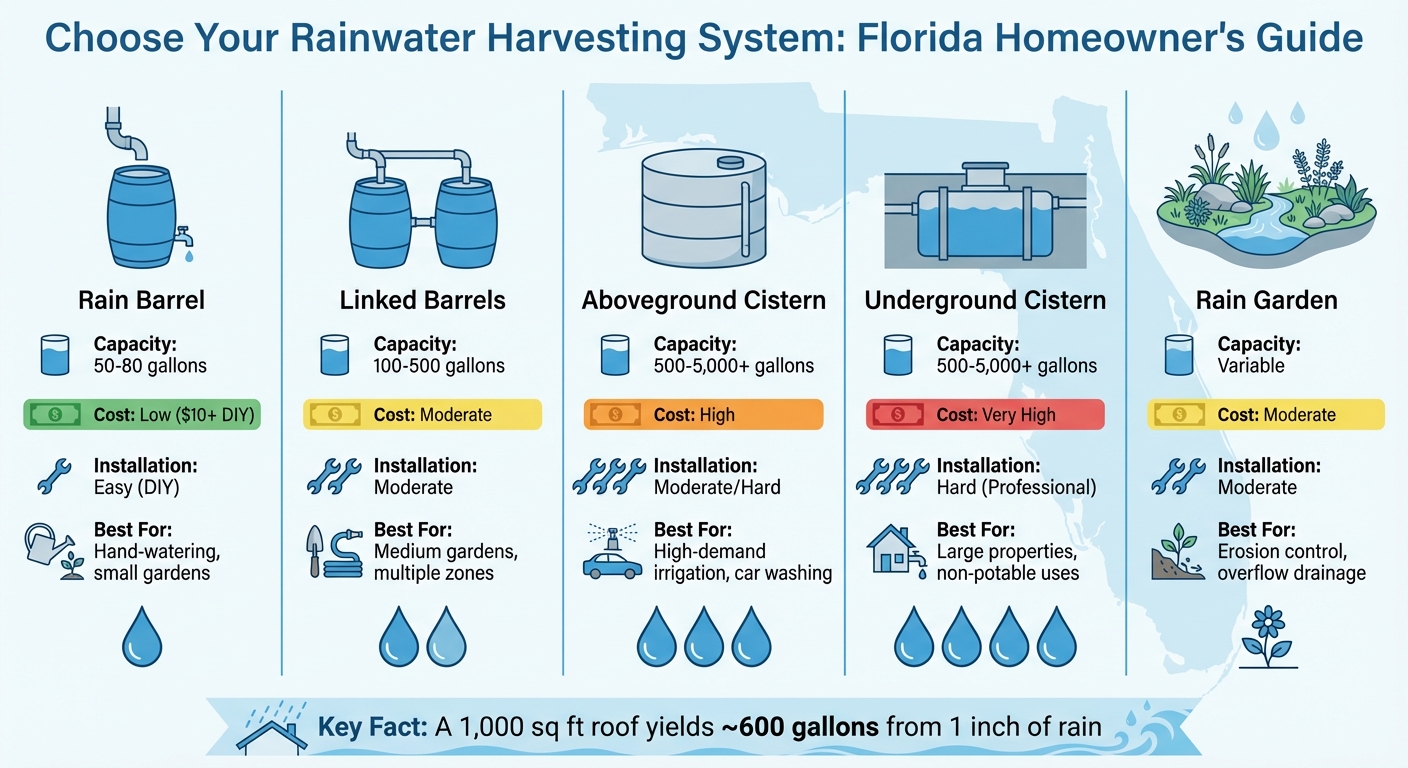
Rainwater Harvesting System Types Comparison for Florida Homes
Rain Barrels and Connected Barrel Systems
For Florida homeowners looking to start harvesting rainwater, rain barrels are an easy and affordable option. These barrels, which typically hold between 50 and 80 gallons, are placed under downspouts to collect roof runoff. They come equipped with mesh screens to keep out debris and mosquitoes, along with a spigot for convenient water access.
One of the biggest draws of rain barrels is their low cost and simple setup. You can even repurpose food-grade 50-gallon drums, often sourced from juices or pickles, for about $10. These barrels are ideal for small-scale tasks like watering plants or cleaning outdoor areas, making them a practical first step into rainwater collection.
If a single barrel doesn't meet your needs, you can link multiple barrels together in a connected system. This setup allows overflow from one barrel to fill the next, boosting your storage capacity - perfect for Florida's heavy but sporadic rainfall. To reduce algae growth, it's best to use opaque, durable plastic containers rather than clear ones.
For those with larger water needs, more advanced systems offer greater storage and functionality.
Aboveground and Underground Cisterns
Cisterns are a go-to solution for homeowners who require more substantial water storage, often holding 1,000 gallons or more. These systems can be installed aboveground, underground, or partially submerged and are typically made from materials like reinforced concrete, galvanized steel, or heavy-duty plastic. They also include watertight lids and pre-filtration features, such as gutter guards, to keep debris out.
Aboveground cisterns expand on the concept of rain barrels by offering significantly higher capacity for irrigation or other non-potable uses. They are easier to maintain but require careful planning, such as building a stable, level platform to support the weight. Keep in mind that water weighs about 8.3 pounds per gallon, so a 1,000-gallon cistern will need a sturdy foundation, often constructed with cinder blocks. These systems are particularly useful for homeowners with large gardens or extensive landscaping.
Underground cisterns, on the other hand, save surface space but come with their own challenges in Florida. The state's high water table can make excavation tricky and costly. These systems must be completely watertight and often require professional installation and permits. While the upfront costs are higher than those for rain barrels, underground cisterns are sometimes the only viable option for homeowners needing to store several thousand gallons of water for landscaping or non-potable household purposes.
Rain Gardens and Overflow Management
Managing excess water is just as important as storing it, and that's where rain gardens come in. These specialized landscape features aren't meant for storage; instead, they help control overflow, reduce erosion, and filter out pollutants. Acting as natural retention zones, rain gardens protect your home's foundation while also replenishing groundwater.
To create a rain garden, dig a shallow depression and fill it with stone and gravel. Position the garden so that overflow water is directed away from your home, minimizing the risk of foundation flooding. You can even connect an overflow pipe from your rain barrel to the garden for efficient water management during heavy storms.
Selecting the right plants is essential in Florida's climate. Opt for hardy, Florida-friendly species that can handle both the heavy rains of the wet season and the dry spells of the drier months. During the garden's establishment, keep it mulched, weeded, and consider occasional watering during extended dry periods. Some homeowners design their rain gardens to recharge groundwater naturally, while others prefer decorative lined ponds. Be sure to check local regulations or HOA rules before deciding on your design.
| System Type | Typical Capacity | Relative Cost | Installation Complexity | Best Use Case |
|---|---|---|---|---|
| Rain Barrel | 50–80 Gallons | Low ($10+ DIY) | Easy (DIY) | Hand-watering, small gardens |
| Linked Barrels | 100–500 Gallons | Moderate | Moderate | Medium gardens, multiple zones |
| Aboveground Cistern | 500–5,000+ Gallons | High | Moderate/Hard | High-demand irrigation, car washing |
| Underground Cistern | 500–5,000+ Gallons | Very High | Hard | Large properties, non-potable uses |
| Rain Garden | Variable | Moderate | Moderate | Erosion control, overflow drainage |
How to Design and Install a Rainwater Harvesting System
Planning and Design Considerations
Start by determining how much rainwater your roof can collect. On average, one inch of rain over 1,000 square feet of roof can yield about 600 gallons of water, though you should account for roughly 20% loss due to evaporation, wind, or gutter spillage. When measuring your roof's catchment area, include the house's total square footage and the overhang of the eaves.
Place your barrels or cisterns beneath downspouts or roof valleys that collect the most water and position them close to where you'll use the water, such as near gardens or flower beds. For gravity-fed systems, every 2.5 feet of elevation adds about one pound of water pressure. Elevating your storage unit on a stable platform can improve water flow without needing a pump.
Before finalizing your system, check with your HOA to see if there are any restrictions on size, location, or appearance that could affect your plans. Make sure your rainwater system is completely separate from your home's potable water or sprinkler systems to avoid cross-contamination. Once you've addressed these considerations, you can move on to the installation process.
Installing Barrels and Cisterns
Setting up a rain barrel system is simple with the right steps. Choose a heavy-duty, opaque, food-grade plastic container that hasn’t been used to store harsh chemicals. The opaque material helps block sunlight, reducing algae growth. If you’re stacking multiple barrels, create a strong foundation using interlocked concrete cinder blocks to prevent tipping and to provide elevation for better water pressure. Remember, a full 55-gallon barrel weighs over 450 pounds, so a sturdy base is essential.
To install a spigot, drill a 15/16-inch hole a few inches from the bottom of the barrel. This placement allows sediment and debris to settle below the outlet. Attach a 3/4-inch hose spigot for easy access to the water. At the top of the barrel, secure a fine mesh or window screen to keep out debris and stop mosquitoes from breeding. Connect your downspout to the barrel using a flexible extender, and add an overflow pipe to redirect excess water away from your home’s foundation - especially important during Florida’s heavy tropical storms. The overflow can either feed into additional barrels or be directed to a rain garden.
For larger cisterns that hold 1,000 gallons or more, installation is more complex. You may need a professional structural assessment and permits from your local government. Once the system is in place, focus on protecting it against Florida’s intense weather conditions.
Hurricane and Storm Preparation
Florida’s storm season brings unique challenges for rainwater systems. Tropical storms can drop several inches of rain in just a few hours, so managing overflow is critical to prevent water from pooling around your foundation and causing structural damage. Overflow pipes are your first line of defense, directing excess water to rain gardens or other areas of your yard. Check these pipes regularly during the rainy season to ensure they’re working properly. If you plan to be away during storm season, disconnect the downspout from your barrel and cover the top screen to avoid uncontrolled overflow near your home.
Secure all elevated tanks and platforms before hurricane season. High winds and saturated soil can destabilize even well-built structures, so make sure your cinder block foundation is securely interlocked. Keep gutters and downspouts clear of debris, and consider adding gutter guards to reduce clogs during heavy rain.
| Storm Prep Task | Why It Matters | When to Do It |
|---|---|---|
| Clean gutters and downspouts | Prevents clogs during heavy rain | Before storm season (May–November) |
| Test overflow pipes | Ensures excess water flows away from the house | Monthly during the rainy season |
| Inspect platform stability | Prevents tipping during high winds or heavy rains | Before each storm warning |
| Disconnect if away | Avoids foundation damage from unmanaged overflow | Before extended absences |
For larger cistern installations or when integrating a rainwater system into a broader home improvement project, professional help can ensure your system meets local regulations and blends seamlessly with your property. In Central Florida, companies like Gomez Contractors specialize in remodeling projects that can incorporate these systems into your home design.
Maintaining Your Rainwater Harvesting System
Regular Maintenance Tasks
Florida's weather makes regular upkeep of your rainwater harvesting system essential. After storms, clean your gutters and downspouts to prevent clogs caused by leaves and other debris. With the rapid accumulation of organic material in Florida, adding gutter guards can save you time by reducing how often you need to clean.
Check the screens on your rain barrels every few weeks, especially during the rainy season, to remove any buildup. These fine mesh screens are great for keeping out leaves and insects but can become blocked if neglected. Make it a habit to clear the screens regularly and rinse out barrels or cisterns annually to get rid of sediment and debris. If you’re using a new food-grade barrel, rinse it first with a mixture of 1/8 cup bleach and 5 gallons of water to ensure it’s clean and safe.
Preventing Mosquitoes and Algae
Once your system is clean, focus on keeping pests and algae at bay. Mosquitoes are notorious for breeding in standing water, so make sure your system is sealed tightly. Use fine-mesh screens and lids to cover all openings, and inspect these seals often to ensure there are no gaps where mosquitoes could get in.
Algae growth is another issue, especially in Florida’s abundant sunshine. To minimize algae, use opaque, heavy-duty plastic containers that block sunlight. Clear or translucent barrels, on the other hand, can encourage algae growth, which can clog your system over time. Interestingly, research from the University of Florida shows that roof temperatures in South Florida can reach between 124°F and 150°F, which helps kill bacteria in the water before it enters your barrel. While this is a helpful feature, it’s not a substitute for proper algae prevention measures.
Seasonal Adjustments and System Upgrades
Florida’s seasons bring different challenges for your rainwater system. During the summer months, when rainfall can range from 48 to 73 inches annually, your barrels may fill up quickly. Keep an eye on overflow pipes during heavy storms to ensure excess water is directed away from your home’s foundation. If you’re planning to be away during hurricane season, disconnect the downspout and cover the top screen to protect your system.
In the drier months, your stored rainwater becomes especially valuable for maintaining your landscape without relying on municipal water. If you find your current storage isn’t enough, consider linking multiple barrels together or upgrading to a larger cistern with a capacity of 1,600 gallons or more. Adding a small pump can also boost water pressure if gravity alone isn’t sufficient for your irrigation needs.
Conclusion: Rainwater Harvesting for Florida Homes
Rainwater harvesting systems provide Florida homeowners with a smart way to cut water costs and manage stormwater runoff effectively. Thanks to Florida's frequent rainfall, even a smaller roof can collect a surprising amount of water for storage. Whether you're starting small with a 50-gallon barrel for hand-watering or opting for a larger 1,600-gallon cistern to irrigate your entire landscape, these systems can lead to significant savings and reduced reliance on municipal water.
The key to success lies in choosing the right system for your property. For smaller gardens, rain barrels are a simple and effective option, while larger yards may benefit from cisterns. Regular upkeep, like clearing out gutters, checking screens, and managing overflow, ensures your system performs well throughout the year.
Beyond the practical benefits, integrating a rainwater harvesting system into your home renovation can enhance both functionality and curb appeal. Whether you're upgrading your outdoor spaces or tackling a full home remodel, planning for rainwater collection from the beginning can maximize both efficiency and aesthetics. For example, underground cisterns save yard space, and beautifully designed rain gardens can solve drainage issues while adding to your landscape’s charm. A professional design ensures your system works seamlessly without becoming a maintenance hassle.
Gomez Contractors, a trusted name in Orlando and Central Florida, specializes in custom outdoor living spaces and complete home renovations. Their team can help you incorporate rainwater harvesting into your plans, whether it’s constructing a sturdy platform for an aboveground cistern, integrating underground storage into your yard, or designing rain gardens that blend perfectly with your outdoor spaces. With professional installation, you can rest assured that your system will meet local codes, handle Florida's intense storms, and provide reliable operation for years to come.
With the right planning and expert installation, a rainwater harvesting system can deliver long-term savings and greater water independence for your home.
FAQs
What makes rainwater harvesting especially beneficial for Florida homeowners?
Florida’s plentiful rainfall - ranging from 48 to 73 inches annually - makes rainwater harvesting a smart option for homeowners. To put it in perspective, just one inch of rain falling on a 2,000-square-foot roof can produce around 500 gallons of water. That’s a free and sustainable source perfect for irrigation or other non-drinking purposes. This becomes especially handy during Florida’s drier winter months, cutting down reliance on municipal water and helping to lower utility costs.
Beyond personal benefits, collecting rainwater also helps tackle stormwater runoff, which can lead to flooding, erosion, and pollution in local waterways. By using barrels or cisterns to store rainwater, homeowners not only conserve resources but also reduce the pressure on Florida’s groundwater reserves. Plus, rainwater is naturally soft and free of chemicals, making it excellent for gardens and landscaping.
For a customized system, Gomez Contractors offers rainwater harvesting solutions designed to meet local requirements, optimize water collection, and seamlessly integrate with your outdoor spaces. Florida’s abundant rain can become a dependable, eco-friendly asset for your home.
How can I figure out the right size for a rainwater harvesting system for my Florida home?
To figure out the right size for a rainwater harvesting system, start by estimating how much water your roof can collect and compare it to your household's needs, like watering a garden or maintaining a lawn. For instance, in Central Florida, a 2,000-square-foot roof can gather roughly 1,000 gallons of water from a 1-inch rainfall. This estimate already factors in some loss due to evaporation and splashing. To calculate your roof's potential, multiply its area by your region's average rainfall.
Next, determine how much water you'll need during drier months. A small garden might use between 300 and 600 gallons per season, while a larger lawn could require over 1,000 gallons. If you already have a storage solution, such as a 55-gallon rain barrel, subtract that from your target capacity. For smaller needs, a 50- to 80-gallon barrel might do the job, but larger systems could call for underground cisterns or interconnected barrels.
Gomez Contractors offers help in designing and installing a rainwater harvesting system customized to your needs. They’ll also make sure it complies with local regulations and HOA guidelines.
How do I maintain a rainwater harvesting system for long-term use?
To keep your rainwater harvesting system working smoothly, sticking to a regular maintenance routine is essential. Start by cleaning out gutters, downspouts, and any screens or filters at least twice a year - spring and fall are ideal times for this. This helps prevent debris buildup that could clog the system. If trees are nearby, trimming overhanging branches can minimize leaves and organic matter from getting into your setup.
Every few months, take the time to inspect the storage tank, spigot, and pump for any signs of leaks, wear, or damage. Make sure the tank’s lid is tightly sealed to keep out pests like insects and rodents. Also, check for cracks or damage caused by sunlight. Don’t forget to rinse or replace filters and mesh inserts as needed to avoid sediment buildup or algae growth, which can compromise water quality.
A quick glance at the water itself can also reveal potential problems. Look for floating debris, odd odors, or discoloration - these are early warning signs of issues. Keeping up with these simple tasks not only ensures clean water for irrigation or landscaping but also helps your system last longer. It’s a cost-effective way to make the most of your rainwater harvesting setup, especially in Florida’s climate.